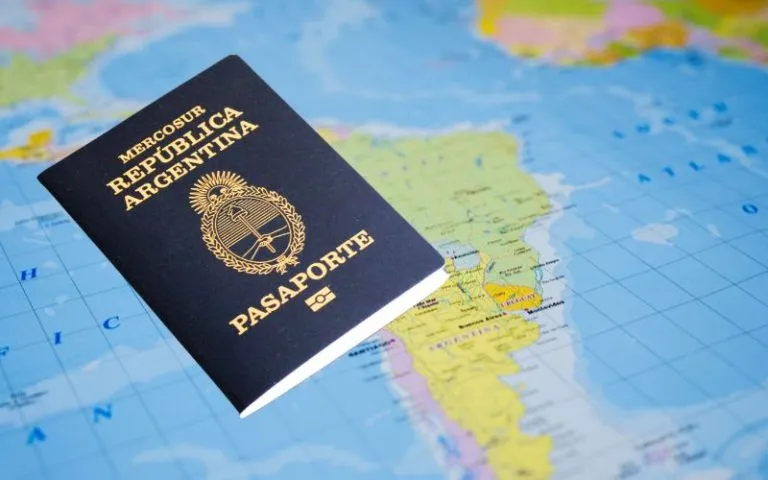

The Government of Antigua and Barbuda has decided to end its Citizenship by Investment Programme (CIP) to maintain visa-free access to Europe’s Schengen Area, amid mounting pressure from the US, UK and EU to shut down citizenship-for-sale programmes. It brings an end to a programme that has run for 13 years since its launch in 2013 to generate investment and jobs for nationals and to put the islands on the road to sustainable growth and development.
Antigua and Barbuda is the first of the five Eastern Caribbean CBI countries to publicly disclose its decision, days ahead of the 12 November deadline set by the European Commission.
Decision Taken
Prime Minister Gaston Browne communicated his administration’s position in a letter dated 30 October to Magnus Brunner, Commissioner for Internal Affairs and Migration at the European Commission. The Prime Minister stated that the programme will not be terminated abruptly but phased out gradually.
The European Commission had set a June 2028 timeline for the programmes in Antigua and Barbuda and the four other Eastern Caribbean countries to be phased out if these countries want to keep visa-free access. However, the Antigua government has asked Brussels for an additional two years, to 2030, to allow an orderly wind-down of its programme.
The EU’s Request
In a letter dated 25 June 2026, signed by Commissioner Magnus Brunner and addressed to Prime Minister the Right Honourable Gaston Browne, the European Commission formally requested that Antigua and Barbuda phase out its CBI Programme by 1 June 2028.
The EU grounded its request in a revised Visa Suspension Mechanism adopted by the Union on 31 December 2025. Under this new framework, the mere operation of a CBI programme, regardless of how well it is managed, is now a self-standing ground for suspending visa-free access.
The Commission’s letter offers a 24-month transition period and proposes specific interim measures, to be in place no later than September 2026:
- Full exclusion of individuals subject to EU restrictive measures.
- Reinforced vetting procedures for all nationalities.
CIP Loss and Consequences
The A&B government collected about $58 million CIP revenues in 2025 and budgeted $44.4 million for 2026, or roughly 7% to 11% of recurrent revenue,
The Prime Minister warned that closing the CIP too quickly could have serious consequences for Antigua and Barbuda’s economy. He pointed to the programme’s contribution to hurricane recovery, public infrastructure, social services and tourism developments, arguing that the investment has supported jobs and local businesses.
According to the IMF, CIP inflows helped Antigua and Barbuda achieve a primary fiscal surplus of nearly 5 per cent of gross domestic product in 2025.
Fate of CBI in Other OECS Countries
Decisions on the future of their CBI programmes in Grenada, St. Lucia, St. Kitts and Nevis and Dominica remains awaited, which signed a common regional framework in 2025.
Source: ABS Evening News at 7.