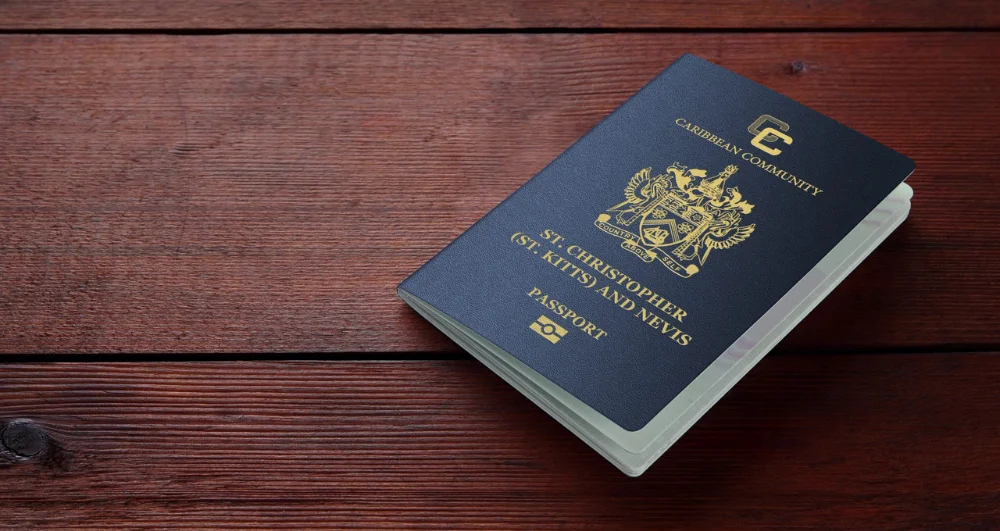
The History of UK dual nationality goes back prior to 1870’s where dual nationality is entirely barred under any circumstances. It was not until 1948 where dual nationality for British nationals was openly accepted.
Prior to 1870’s
British subjects could not divest themselves of their nationality in any circumstances. However, in addition to introducing provision for renunciation of British subject status, the Naturalization Act 1870 provided that British subjects would be deemed to have lost that status automatically if they voluntarily naturalized in a foreign country.
1914
The British Nationality and Status of Aliens Act 1914 retained the concept of loss of British subject status by naturalization in a foreign country and, initially, the 1870 Act provisions relating to the status of wives.
1922
As regards minors, the position was similar, although rather more complicated. The British Nationality Act 1922, however, provided that children who held another nationality would lose British subject status unless, on attaining majority (i.e. age 21), they declared a desire to remain British and, if possible, renounced the other nationality.
1933
The British Nationality Act 1933, passed as a result of the 1930 Hague Convention, provided retrospectively that:
• A woman who married a foreign national would not lose British subject status unless she automatically acquired her husband’s nationality as a result of the marriage
• Where her husband naturalized as a foreign national during the marriage, she could make a declaration of retention of British nationality
1943
The “renunciation” element was repealed by the British Nationality Act 1943, which also provided for the acceptance of “late” declarations of retention (as a result, children could be deemed to have retained British nationality by making a declaration under the 1943 Act even if they had lost it under the 1922 Act).
1948
The British Nationality Act 1948 removed restrictions on dual nationality, largely
for the following reasons:
• Dual nationality was not thought to be so undesirable, since most practical problems were avoided by the Master Nationality Rule
• The majority of cases of dual nationality were caused by the conflict of laws rather than by naturalisation abroad
• There had been difficulties administering the 1914 Act provisions: it was not always clear whether a person had acquired a foreign nationality voluntarily by naturalisation, it often involved the interpretation of obscure foreign law, and there were anomalies
• The policy of allowing British nationality to be retained was felt to be justified by the loyalty shown during the Second World War by the large British communities abroad with dual nationality
The Master Nationality Rule
The UK Government normally extends diplomatic protection to British nationals outside the UK. However, Article 4 of the Hague Convention on Certain Questions relating to the Conflict of Nationality Laws, 1930 provides that “a State may not afford diplomatic protection to one of its nationals against a state whose nationality such person also possesses”.
Commonly known as the “Master Nationality Rule”, the practical effect of this Article is that where a person is a national of, for example, two States (A and B), and is in the territory of State A, then State B has no right to claim that person as its national or to intervene on that person’s behalf. Such a person who goes into the territory of a third state may be treated as a national of either A or B – it does not normally matter which one, except, for example, where the courts of the third state have to adjudicate upon matters relating to that person’s status and the relevant laws depend on the person’s nationality. In such cases, it is necessary to choose an effective nationality (i.e. one of the two nationalities is selected as effective for the purposes of the third state)